K1 Series Door Vibration Damper: Precision Fit for Enhanced 3D Printing Stability
Understanding the Role of Door Vibration Dampers in 3D Enclosures
As 3D printing technology advances, maintaining a stable and controlled environment becomes increasingly important. Enclosures, especially those used with high-speed or high-temperature printers, are subject to mechanical stress, thermal fluctuations, and vibration. The K1 Series Door Vibration Damper is an engineered solution designed to mitigate these issues by ensuring the enclosure’s glass door remains stable, aligned, and secure during operation.
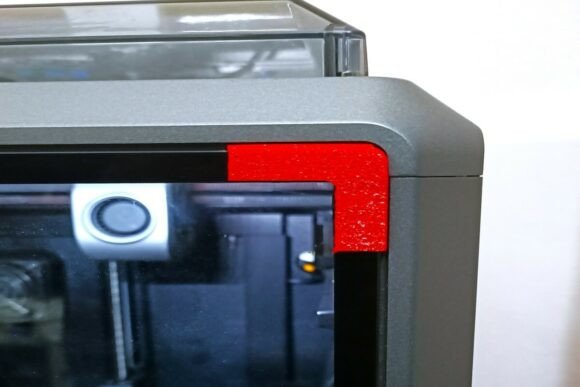
Unlike generic door inserts, this damper is specifically tailored for the Creality K1 series, including the K1 Max and K1C models. Its primary function is to absorb vibrations, prevent misalignment, and protect the edges of the glass door—critical factors in maintaining both print quality and enclosure longevity.
Key Features and Design Considerations
- Universal Fit: The damper is compatible with all K1 series enclosures, regardless of model or build date, ensuring seamless integration without modification.
- Vibration Damping: Made from flexible materials like TPU, the damper effectively reduces mechanical oscillations that can disrupt print consistency.
- Edge Protection: The design includes a protective lip that shields the glass edges from chipping or wear caused by repeated door movement.
- Precision Alignment: Maintains consistent door closure and alignment, which is essential for thermal stability and print accuracy.
Available in two thicknesses—1mm and 0.5mm—the damper allows users to customize the fit based on their specific build tolerances or door gap preferences. This flexibility ensures that both tight and loose-fitting doors can benefit from improved performance.
Material Selection and Print Specifications
For optimal performance, the K1 Series Door Vibration Damper should be printed using TPU or another flexible filament. These materials provide the necessary resilience and grip to absorb vibrations without compromising structural integrity. A wall thickness of 0.25mm is recommended to balance flexibility with durability.
The damper’s design is print-in-place, meaning it can be printed without the need for supports or post-assembly. This not only simplifies the fabrication process but also ensures that each unit is produced consistently and accurately.
Installation and Maintenance
One of the damper’s most user-friendly features is its removability. It can be installed and removed as needed, making it easy to clean, replace, or upgrade the enclosure’s components without damaging the door or frame. For users seeking a more permanent fix, the damper can be glued using craft glue or B-7000 adhesive, which offers a strong yet flexible bond suitable for dynamic environments.
Maintenance is minimal, thanks to the damper’s durable construction and resistance to heat. It remains effective even in high-temperature chambers, where thermal expansion and contraction can cause standard materials to degrade over time.
Practical Applications and Real-World Benefits
Professionals and hobbyists alike will find the K1 Series Door Vibration Damper invaluable in a variety of scenarios. For example, in a production environment where printers run continuously, maintaining door alignment and minimizing vibration can significantly reduce downtime and improve output consistency.
In educational settings, such as makerspaces or university labs, these dampers help ensure that shared equipment remains in good condition, even under frequent use. They also serve as a practical teaching tool for students learning about mechanical design, material properties, and the importance of precision in engineering applications.
Performance Comparison with Alternative Solutions
Compared to generic rubber or silicone door seals, the K1 Series damper offers superior performance in terms of alignment, durability, and vibration control. Many standard seals compress over time or fail to provide a consistent fit across all door edges. In contrast, the damper’s engineered design ensures uniform pressure distribution and long-term reliability.
Additionally, unlike adhesive-backed foam or felt strips, which can peel off or degrade in high-heat environments, the damper maintains its integrity and functionality even under extreme conditions. This makes it a more sustainable and cost-effective option for long-term use.
Design Flexibility and Customization Options
While the damper is designed for universal compatibility, users can further customize it to suit their specific needs. For instance, those with tighter door gaps may opt for the 0.5mm thickness to ensure a snug fit without excessive pressure. Conversely, the 1mm version is ideal for larger gaps or for users who prefer a more forgiving installation.
Designers and creators can also experiment with different materials to achieve varying levels of flexibility and grip. Some may choose to print the damper in a semi-transparent filament to maintain visibility while adding a subtle aesthetic touch to their printer enclosure.
Thermal Resistance and Longevity
One of the standout features of the K1 Series Door Vibration Damper is its heat resistance. Enclosures used for printing with materials like ABS or PC require elevated chamber temperatures, often exceeding 100°C. Standard door seals may warp or lose elasticity under such conditions, but this damper is specifically engineered to remain stable and functional.
This thermal resilience contributes to the damper’s longevity, reducing the need for frequent replacements and ensuring that users get the most value from their investment. It also enhances the overall safety of the printing environment by preventing door warping or misalignment that could compromise chamber integrity.
Integration into Workflows and Maintenance Routines
For users who regularly maintain or upgrade their 3D printers, the damper’s removable design makes it easy to incorporate into existing workflows. Whether replacing a worn-out damper or installing a new one after a door adjustment, the process is straightforward and requires no special tools.
Additionally, because the damper is reusable, users can remove it during deep cleaning or enclosure modifications and reinstall it without concern for damage or loss of function. This ease of use encourages regular maintenance, which in turn supports better print quality and longer equipment life.
Community Feedback and User Experience
Within the 3D printing community, feedback on the K1 Series Door Vibration Damper has been overwhelmingly positive. Users report noticeable improvements in print quality, particularly in high-speed or high-temperature scenarios where enclosure stability is crucial.
Many users also appreciate the damper’s simplicity and effectiveness. Unlike complex door locking mechanisms or aftermarket seals that require frequent adjustments, this damper provides a reliable, low-maintenance solution that enhances the overall printing experience without adding unnecessary complexity.
Final Thoughts on Implementation and Value
Incorporating the K1 Series Door Vibration Damper into your 3D printing setup is a straightforward yet impactful way to enhance performance, durability, and user satisfaction. Whether you're a professional running a production line, a hobbyist fine-tuning your home printer, or an educator managing a shared lab environment, this damper offers a practical and effective solution for maintaining enclosure stability.
Its combination of precision engineering, material resilience, and ease of use makes it a valuable addition to any K1 series printer. By addressing common issues like vibration, misalignment, and edge wear, it helps ensure that your prints remain consistent, your equipment stays in top condition, and your overall workflow runs smoothly.